
Fit for Biodiversity: Biodiversity Governance and Performance in the Food Sector
Background
The “Biodiversity Governance and Performance in the Food Sector” (Fit for Biodiversity) project is a four-year initiative to improve biodiversity management in the food industry. It aims to mitigate the environmental impacts of food production and support ecosystem restoration by integrating biodiversity into corporate sustainability strategies. It introduces incentive programs for farmers, explores the potential of biodiversity credits, and reinforces national and EU-wide initiatives to align with international biodiversity goals. Safeguarding biodiversity is essential for resilient food systems and long-term sustainability.
Co-financed by the EU LIFE program, the project aligns with the objectives of the International Convention on Biological Diversity, agreed in November 2022. It empowers decision-makers through tailored training for managers, CSR professionals, auditors and accountants—enabling companies to meet current and future biodiversity-related requirements and make informed, sustainable choices.
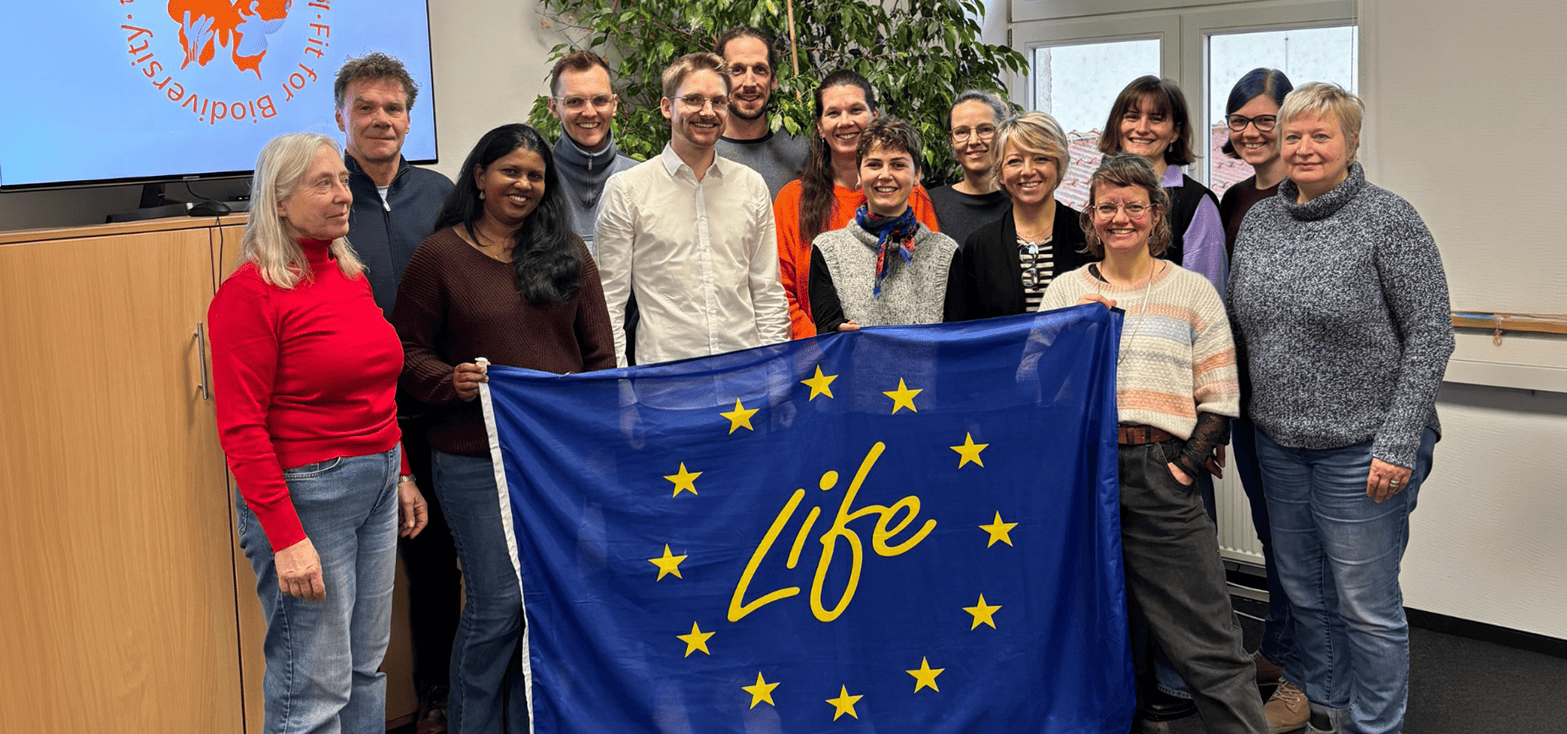
The project began in September 2024. Alongside Meo Carbon Solutions (MCS), the partners include the Global Nature Fund (project coordinator), Bodensee Stiftung, Food for Biodiversity Association and Justus-Liebig-University Giessen.
The Challenge
The food industry is one of the largest drivers of biodiversity loss worldwide. Intensive farming practices, monocultures and the overuse of chemicals have degraded ecosystems—threatening species and vital natural resources. This decline not only threatens ecosystems but also compromises food security and supply chain resilience. Despite growing awareness, many companies in the agrifood sector still lack clear strategies or tools to measure and improve their biodiversity impact.
This gap between intention and action makes it difficult for businesses to respond effectively to environmental challenges. With EU policies such as the Farm to Fork Strategy and the Corporate Sustainability Reporting Directive (CSRD) pushing companies to take responsibility for their environmental footprint, there is an urgent need for practical solutions that enable meaningful biodiversity action.
Our Solutions
MCS is exploring incentive options for biodiversity in the agrifood sector, with a particular focus on biodiversity credits. This work includes analyzing biodiversity credit markets and schemes, consulting with companies and farmers on incentive programs and supporting the integration of biodiversity restoration into corporate strategies through insetting activities.
Our Approach
MCS leads the comprehensive assessment of the biodiversity credit market and existing biodiversity crediting schemes. The analysis aims to describe the market’s current state and highlight the challenges faced by schemes, buyers and project developers. Based on these insights, MCS will provide guidance on biodiversity credits and strategies to make ecosystem and biodiversity restoration a viable business case for the agrifood sector.
Planned outputs include a biodiversity credits dossier to evaluate biodiversity credit systems, a biodiversity finance framework to explore financing options and feasibility studies assessing the viability of insetting projects within supply chains. These resources aim to equip companies and NGOs with actionable knowledge and tools to restore ecosystems and build nature-positive business models.
The Results
MCS has initiated stakeholder engagement through workshops that shared initial insights into biodiversity incentives, sparking dialogue among project partners and industry stakeholders—paving the way for future collaboration.
The project aims to enable companies to implement measurable biodiversity actions, integrate biodiversity objectives into corporate strategies and mobilize investment for scalable nature-based solutions. As the project progresses, companies in the agrifood sector will gain tools to implement nature-positive activities, navigate policy requirements and integrate biodiversity objectives into corporate strategies and land-use planning. By bridging scientific knowledge, policy frameworks and market mechanisms, the project will help mobilize investment, improve access to finance and foster scalable, measurable and transparent biodiversity outcomes across Europe.
Project Partners:





Premium Partners:


With Financial Support From:



This project was partially funded by the LIFE Programme of the European Union. More information under Grand Agreement Number 101148484. However, the views and opinions expressed are solely those of the author(s) and do not necessarily reflect those of the European Union or CINEA. Neither the European Union nor the granting authority can be held responsible for them.