The Food Security Standard: Strengthening Human Rights in Agricultural Production
Background
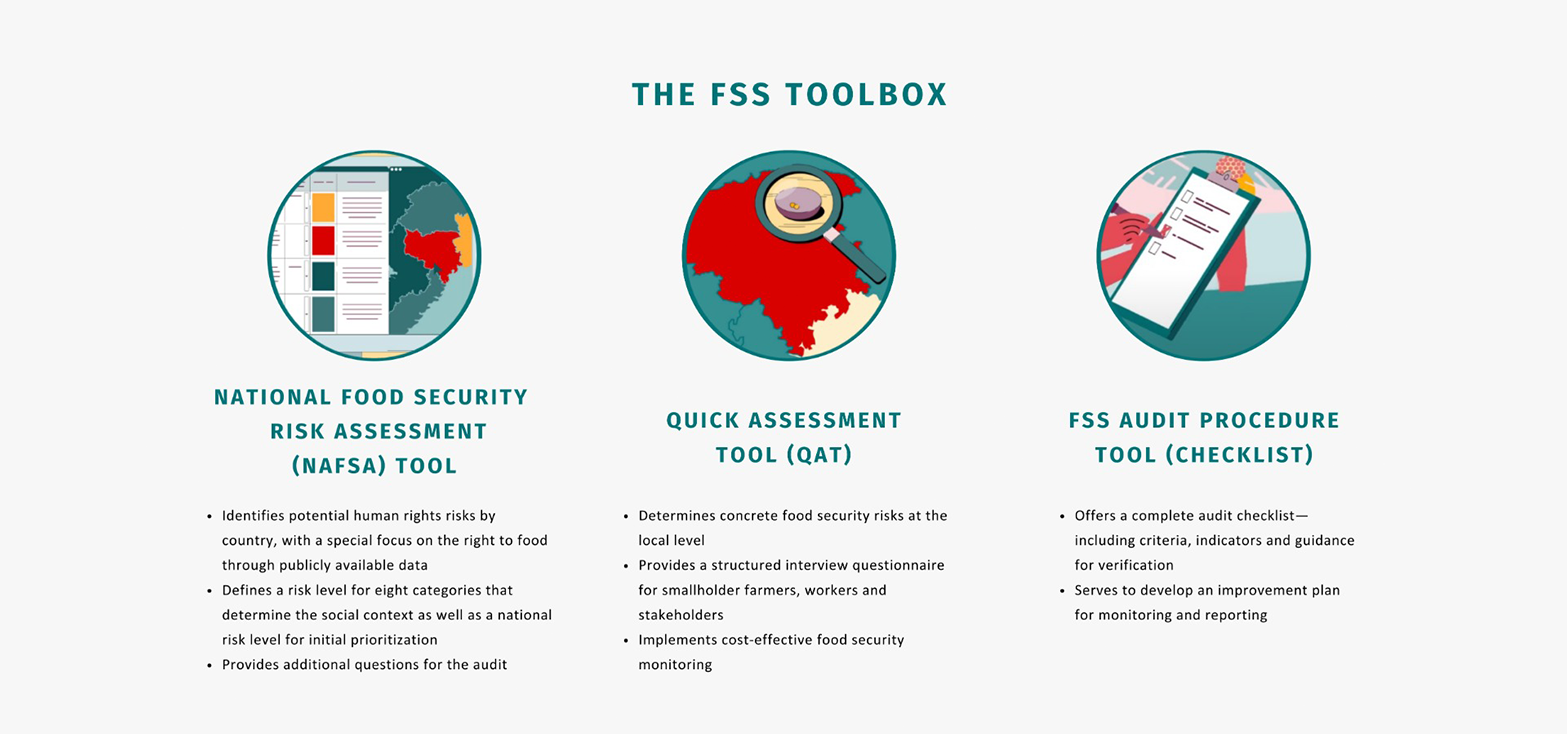
The Food Security Standard (FSS) is an initiative designed to address food insecurity within agricultural production. While it initially aimed to support private-sector actors in identifying and mitigating food security risks, the FSS has evolved into a comprehensive, human rights verification tool for all crops, regions and production scales. It focuses on countries where food insecurity remains a pressing challenge. The FSS offers a practical toolbox for implementing human rights due diligence—including , an audit checklist with verification guidance and customized support by the FSS team—making it a holistic resource for companies seeking to align agricultural practices with food security and human rights principles.
Welthungerhilfe (WHH), one of Germany’s largest NGOs, and Meo Carbon Solutions (MCS) jointly manage the FSS. The project is co-financed by the German Federal Ministry for Agriculture, Food and Regional Identity (BMLEH) and the Agency for Renewable Resources (FNR).
The Challenge
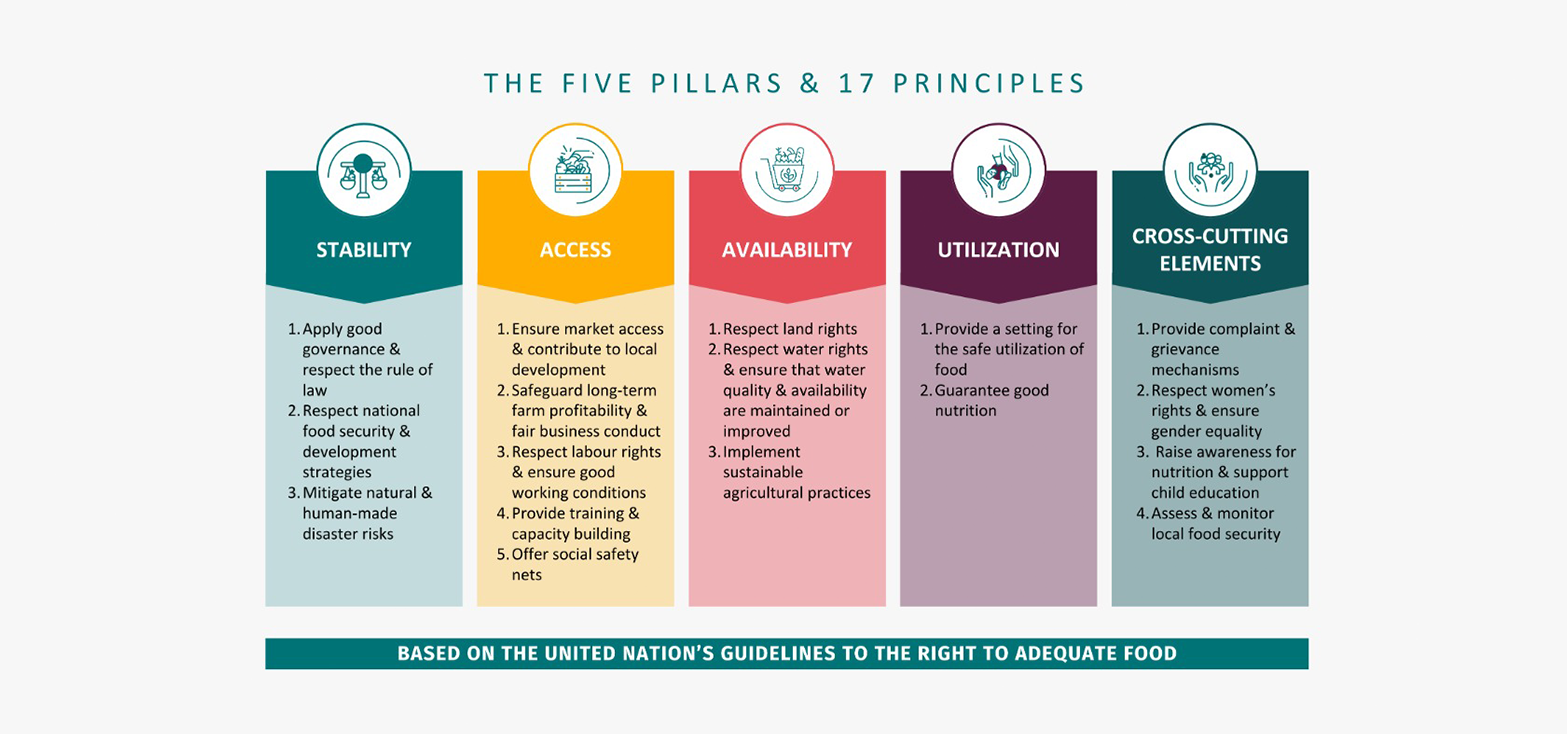
Food security is a fundamental human right and pillar of sustainability. Without reliable access to sufficient, safe and nutritious food, other development goals—such as health, education and economic stability—cannot be achieved. Yet, in many agricultural regions, especially in the Global South, the people who grow food for global markets often face hunger themselves. This contradiction highlights a critical gap in current sustainability efforts: while food security is widely recognized as essential, there is no practical tool to help companies assess and address food security risks in agricultural production.
Ultimately, agricultural supply chains are vulnerable when producers and workers are food insecure, raising ethical concerns and threatening the resilience and reliability of food insecure, raising ethical concerns and threatening the resilience and reliability of mitigate these risks made it difficult to ensure sustainable and responsible sourcing.
Our Solutions
The FSS aims to address this gap in current sustainability efforts by providing a practical, cost-efficient tool for companies and agricultural producers. By serving as an add-on to existing sustainability systems, the FSS ensures compatibility with established audit systems to avoid duplication of effort and allows companies to seamlessly integrate food security considerations into their existing frameworks. MCS’s contribution helps the FSS foster stronger and fairer supply chains while reinforcing ethical practices within the industry.
Our Approach
In its initial phase (2018–2021), WHH, the Center for Development Research (ZEF) and the World Wildlife Fund (WWF) conceptualized and piloted the FSS, with MCS contributing strategic input on sustainability certification schemes. a national-level food security risk assessment tool for initial analysis, an audit checklist that translates the UN guidelines on the right to food into actionable criteria and a structured questionnaire for farmers, workers and local stakeholders. These tools are complemented by tailored training materials for auditors and companies, offering hands-on support and practical guidance.
In the second phase (2022–2025), MCS and WHH focused on embedding the FSS within agricultural supply chains. The team worked with companies across Central and South America, Africa and Asia to support companies in preparing for FSS and FOSSEM audits and used insights from these audits to refine the system. MCS also worked with 15 accredited certification bodies (CBs) and one official partner to expand adoption. Two sustainability standards 4C Services and International Sustainability and Carbon Certification (ISCC) formally integrated the FSS as a voluntary “add-on” by aligning audit procedures and checklists. Additional sustainability standard schemes conducted parallel audits, demonstrating the FSS’s compatibility across existing systems.
To support long-term impact monitoring, MCS collaborated with Global Risk Assessment Services (GRAS) and the University of Münster to develop a digital impact monitoring tool that tracks the FSS’s effectiveness over time. In parallel, the FSS team initiated a legal benchmarking exercise with a law firm, comparing FSS criteria against major European regulations including the German Supply Chain Act (LkSG), the EU Forced Labour Regulation and the Corporate Sustainability Due Diligence Directive (CSDDD). The results confirmed that the FSS helps companies strengthen both voluntary sustainability commitments and compliance with emerging human rights due diligence requirements.
The Results
To date, the FSS has conducted assessments in Latin America, Southeast Asia and Africa with implementations in coffee, palm oil, castor and fruit and vegetable supply chains. The team trained 225 auditors and company staff on implementing the FSS and strengthening human rights in agricultural production. The FSS has worked with four certification standards in combined audits to issue the FSS as a voluntary add-on.
Stay tuned for updates as the project moves into its next phase in 2026, with the goal of establishing the FSS as an independent entity and expanding its reach and impact across global agricultural supply chains.
Managed By:

With Supported From: